
How Josh Bell and Luis Arraez Are Changing the MLB The Show 26 Meta
As MLB The Show 26's competitive scene continues to develop, many players are discovering that success is not solely determined by home-run power. While elite sluggers remain valuable, disciplined at-bats, contact hitting, and smart baseball decisions are proving equally important in Ranked Seasons and Weekend Classic competition. Cards like Josh Bell and Luis Arraez highlight how balanced lineups, MLB The Show 26 Stubs, and consistent execution can outperform teams built entirely around power.
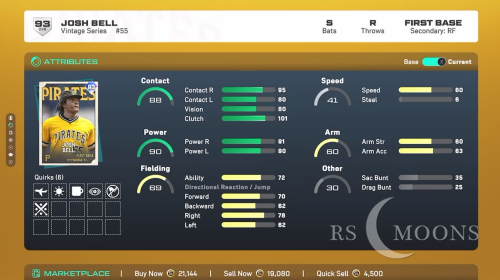
Josh Bell: One of the Most Underrated Bats in MLB The Show 26
Josh Bell has long been a favorite among MLB The Show players thanks to his smooth swing animation, and his MLB The Show 26 card is quickly becoming a popular choice. Despite not always being viewed as a top-tier superstar, Bell offers a combination of contact, power, and vision that makes him extremely effective.
Several factors contribute to his success:
Smooth left-handed swing
Strong contact ratings
Reliable power against both lefties and righties
Solid vision for difficult counts
Ability to hit to all fields
Even when Bell struggled early in games, patience often paid off. Once players became comfortable with his timing, he consistently delivered extra-base hits and home runs. His performance serves as a reminder that a card's effectiveness isn't determined solely by attributes. Swing mechanics and player comfort can often have a greater impact on production.
Finding the Right Swing for Your Playstyle
One of the most overlooked aspects of MLB The Show is swing animation. Two cards may have nearly identical ratings, yet one can perform significantly better simply because the swing feels easier to time.
When evaluating a new hitter:
Give the card multiple games before judging it.
Focus on quality contact rather than batting average.
Monitor exit velocity.
Pay attention to how comfortable you feel in two-strike situations.
Josh Bell is a perfect example of a player whose real value becomes apparent only after enough plate appearances.
Luis Arraez: The Importance of Contact Hitting
While Bell provided power, Luis Arraez demonstrated why contact hitters remain extremely valuable in MLB The Show 26.
Throughout multiple games, Arraez consistently produced:
Multi-hit performances
Tough at-bats
Line-drive contact
Clutch base hits
Constant pressure on opposing pitchers
His ability to put the ball in play repeatedly created scoring opportunities and helped extend innings.
Why Contact Hitters Matter
Many players build lineups entirely around power, but MLB The Show 26 continues to reward strong fundamentals.
Contact hitters excel because they:
Increase pitch counts
Extend innings
Create RBI opportunities
Force mistakes from pitchers
Maintain offensive consistency
A balanced lineup often performs better than a team loaded exclusively with sluggers. While home runs can change a game instantly, consistent base runners create pressure throughout every inning.
Best Lineup Role for Arraez
Arraez is most effective near the top of the batting order.
Ideal spots include:
Leadoff hitter
Number two hitter
His primary responsibilities are simple:
Reach base
Work counts
Create traffic on the bases
Set up power hitters behind him
Once runners are on base, middle-of-the-order bats become significantly more dangerous.
Plate Discipline Wins Games
One of the clearest lessons from high-level gameplay is the value of patience.
Many successful offensive innings begin with:
Full-count battles
Deep at-bats
Strong pitch recognition
Selective aggression
Instead of swinging early at borderline pitches, top players force opponents to throw strikes.
Why Pitch Counts Matter
Casual players often focus only on hits and runs. Competitive players pay close attention to total pitches seen.
Working counts creates several advantages:
Drains pitcher stamina
Increases mistake pitches
Forces bullpen usage
Improves pitch recognition
The longer an at-bat lasts, the greater the chance of receiving a hittable pitch. Over the course of a game, these small advantages add up significantly.
Improving Plate Discipline
A few simple habits can improve offensive consistency.
Take More First Pitches
Unless a pitch is perfectly located for your strengths, consider taking the first offering. This helps gather information about your opponent's tendencies and timing.
Adjust with Two Strikes
With two strikes:
Focus on contact.
Protect the strike zone.
Avoid chasing pitches outside the plate.
Many rallies start with simple singles rather than home runs.
Effective Pitching Still Centers on Command
While offense often receives the most attention, pitching remains the foundation of winning baseball.
The most successful pitchers consistently:
Attack corners
Change speeds
Alter eye levels
Avoid predictable patterns
The objective is not simply throwing strikes. The goal is throwing difficult strikes.
Corner Painting Creates Weak Contact
Successful pitch locations often include:
Sinkers on the edges
Changeups below the zone
Sliders breaking away
Elevated fastballs
By constantly moving around the strike zone, pitchers force hitters to make uncomfortable swings.
Sequencing Is Critical
Many players become predictable by repeatedly relying on the same pitch combinations.
Instead, vary sequences such as:
Fastball inside
Changeup away
Slider below the zone
Elevated fastball
Changing locations and speeds keeps hitters guessing and generates more strikeouts.
Noah Schultz: A Strong Rotation Option
Among starting pitchers, Noah Schultz continues to impress many competitive players.
His strengths include:
Deceptive delivery
Good velocity
Effective pitch mix
Strong strikeout potential
Schultz performs best when used aggressively. His arsenal allows players to attack hitters early while still generating swings and misses.
The key is avoiding repetitive patterns. Mixing every pitch throughout the game makes his arsenal far more effective and difficult to predict.
Understanding RNG and Baseball Variance
Every MLB The Show player eventually experiences frustrating outcomes.
Examples include:
Perfect swings resulting in outs
Weak hits finding open grass
Unexpected bloop singles
Defensive animations creating unusual results
While these moments can be frustrating, they reflect baseball's unpredictable nature.
Focus on the Process
Instead of evaluating individual outcomes, focus on controllable factors:
PCI placement
Swing timing
Exit velocity
Pitch selection
Over a large sample size, quality decisions generally produce better results.
Players who focus only on immediate outcomes often become frustrated, while players who trust the process tend to improve steadily.
Defensive Awareness Can Change Games
Defense often receives less attention than hitting and pitching, but it remains crucial in close contests.
Smart defensive decisions can prevent runs and create momentum-shifting double plays.
When fielding, always consider:
Runner speed
Number of outs
Inning situation
Score differential
Sometimes the obvious play is not the optimal play. Advanced situational awareness often separates elite players from average competitors.
Don't Overlook Arm Strength
Defensive ratings provide hidden value throughout a game.
Strong arms can:
Prevent extra bases
Stop runners from advancing
Turn close plays into outs
Reduce scoring opportunities
In tightly contested Ranked Seasons games, these small advantages frequently determine the outcome.
Building a Competitive Weekend Classic Lineup
For players preparing for Weekend Classic competition, roster construction should focus on balance.
Contact at the Top
Use players who excel at reaching base and extending innings. Contact hitters create opportunities for the rest of the lineup.
Power in the Middle
Players like Josh Bell fit perfectly in middle-order roles because they provide both power and consistency.
Defense Late in Games
Late-game substitutions should prioritize:
Speed
Defense
Arm strength
Protecting a lead can be just as important as building one.
The Mental Side of Ranked Seasons
Perhaps the most important lesson from competitive gameplay is maintaining composure.
Every player will experience:
Missed opportunities
Bad luck
Defensive mistakes
Unexpected losses
The difference between good and great players is often how they respond.
Avoid Tilt
When things go wrong:
Stay patient.
Stick to your approach.
Continue making quality decisions.
One bad inning rarely decides an entire game.
Think Long-Term
Ranked Season success is built through:
Consistency
Discipline
Adaptation
Repetition
Players who remain focused and avoid emotional decisions typically perform better over time.
Final Thoughts
The early MLB The Show 26 meta shows that success is about far more than simply stacking a lineup with the highest-rated power hitters. Josh Bell demonstrates the value of swing comfort and balanced attributes, while Luis Arraez highlights the importance of contact hitting and on-base consistency buy MLB The Show 26 Stubs.
Players looking to improve should focus on:
Working deeper counts
Building balanced lineups
Mixing pitches effectively
Making smart defensive decisions
Staying composed during adversity
Whether you're climbing Ranked Seasons or preparing for Weekend Classic competition, mastering these fundamentals can provide a significant competitive advantage. In MLB The Show 26, smart baseball remains one of the most effective strategies available.
Pro Tip: When testing a new card, avoid judging it after a single game. Give every hitter at least 30 to 50 plate appearances before making a decision. Some of the most productive cards in MLB The Show 26 reveal their true value only after you've learned their timing, tendencies, and strengths.